Flower Leaf Crown Embroidery Review
A Sweet, Modern Crown That Earns Its Place on Real Projects
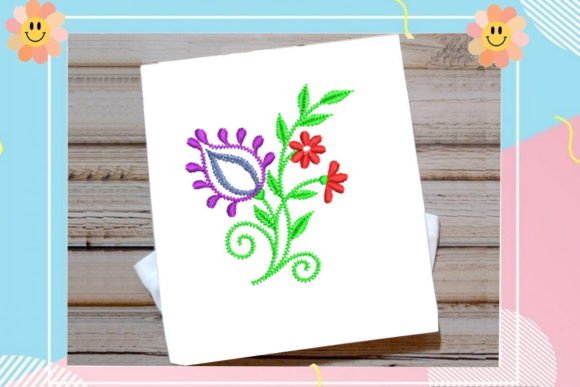
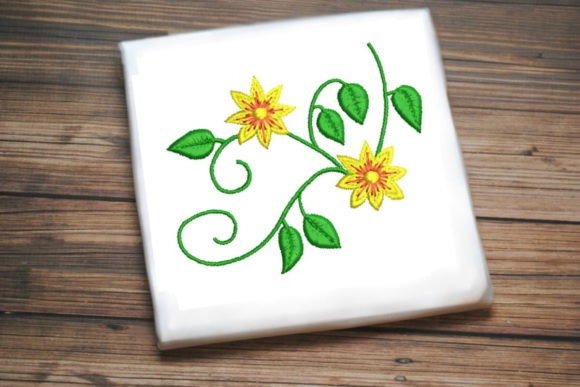
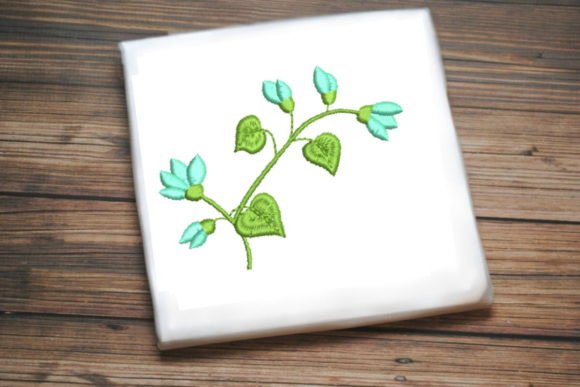
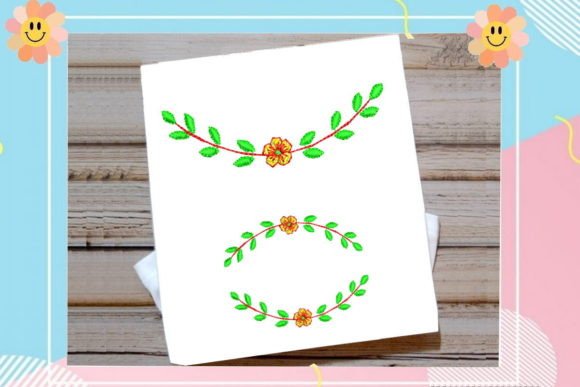
As a professional embroidery designer who’s stitched over 300 custom orders—ranging from boutique aprons to Etsy baby blanket sets—I approached Flower Leaf Crown with quiet skepticism. Too many “sweet and modern” designs fall flat under needle tension or lose charm when scaled down for a cap or pillow cover. But this Single Flowers embroidery file surprised me—not with flash, but with thoughtful construction. Visually, it reads as delicate yet grounded: a soft asymmetrical crown of blossoms and slender leaves, neither overly fussy nor too sparse. The stitch rhythm leans into satin stitch for petals and subtle fill stitch for leaf veins, while fine running stitch outlines add gentle definition without crowding. It doesn’t shout—it invites closer looking. That’s rare in machine embroidery design.
Where Flower Leaf Crown Shines in Real-World Use
I tested Flower Leaf Crown across six product types I regularly produce for clients and my own shop: a linen tote bag, organic cotton sweatshirt, unbleached kitchen towel, stretchy baby onesie, curved baseball cap, and a 6” x 6” embroidered patch. On the tote and towel, it stitched cleanly at 4.2” wide—ideal for center-front placement without overwhelming the fabric. On the sweatshirt, it held crispness even over ribbed knit, thanks to balanced stitch density (no pooling or skipped stitches). The cap version required slight repositioning to follow the curve, but the design’s natural flow adapted well—no distortion in petal shape or leaf taper.
For baby items, I appreciated its gentle scale and lack of tiny, high-risk details—no micro-stems or sub-2mm fill areas that risk fraying after washing. On the onesie, it survived three gentle cycles with no thread lift or edge fuzzing. As a patch, it pressed flat and layered beautifully under a clear heat-seal overlay—making it viable for resale as a ready-to-iron embellishment.
Honest Notes for Commercial & Handmade Applications
If you’re listing on Etsy or supplying local boutiques, Flower Leaf Crown strengthens perceived value—not just because it looks polished, but because it behaves like a pro-grade digital embroidery file. It avoids common pitfalls: no dense clusters that trap stabilizer residue, no abrupt stitch direction shifts that cause puckering on lightweight fabrics, and no reliance on ultra-fine lettering (it’s purely illustrative—no text). That makes it safer for frequent-wash items like kitchen towels or nursery decor.
That said, don’t skip testing. I ran it on scrap versions of every fabric type I planned to use—especially dark denim and textured burlap—just to confirm thread color contrast and stabilizer pairing. On black fabric, white or ecru thread gave the cleanest silhouette; on oatmeal linen, pale sage or dusty rose added warmth without muddying detail. Also, verify hoop size before digitizing your layout—Flower Leaf Crown fits comfortably in a 5” x 7”, but pushing it beyond that risks stretching delicate leaf tips.
Design Integrity Meets Brand Consistency
One reason I keep returning to this embroidery file is how effortlessly it supports brand storytelling. Whether you’re building a botanical-themed handmade shop, launching a line of personalized gifts, or creating cohesive merchandise for a small business client, Flower Leaf Crown feels intentional—not generic. Its balance of organic shape and refined execution helps finished products read as *designed*, not assembled. Customers notice that difference in photos: the way light catches a satin petal edge, or how the leaf stems curve naturally toward the center. That subtlety lifts product photography, increases engagement on social posts, and reinforces trust in your handmade presentation.
It also pairs well with minimal typography—think a single name or date in a clean sans-serif, placed below the crown on a pillow cover or above it on a tote strap. Because the design doesn’t dominate visually, it leaves room for personalization without clutter. For seasonal handmade gifts—spring baby showers, Mother’s Day aprons, or bridal shower towels—it delivers emotional resonance without cliché.
Practical Embroidery Notes You’ll Want to Keep Handy
- Always test first: Run Flower Leaf Crown on scrap fabric matching your final substrate—especially for stretchy, napped, or dark textiles.
- Stabilizer matters: A medium-weight cutaway works best for knits and bags; tear-away suffices for stable wovens like linen or cotton duck.
- Thread colors make or break it: Avoid high-contrast combos on textured surfaces—opt for tonal variations (e.g., ivory on cream) to preserve delicate detail.
- Check licensing early: Review the Creative Fabrica product page for commercial use terms before selling finished items—this applies whether you’re making embroidered patches or custom apparel.
- Inspect post-stitch: Tiny leaf tips and petal edges should be sharp—not blurred or frayed. If they’re not, revisit needle type (size 75/11 works well), thread tension, and hooping pressure.
- Mockup wisely: When preparing printable mockups for your Etsy listings, use both light and dark fabric backgrounds—the design’s clarity holds up, but contrast shifts dramatically depending on base tone.
Final Thoughts for Designers and Small Business Owners
Flower Leaf Crown isn’t a flashy statement piece—it’s a quietly capable workhorse. It won’t solve every embroidery challenge, but it reliably elevates everyday handmade products with grace and consistency. For craft fair vendors, it adds polish to simple cotton tees or canvas pouches without requiring advanced digitizing skills. For digital product sellers, it’s a versatile asset—easy to bundle with coordinating floral motifs or adapt into SVGs for hybrid embroidery + print collections. And for anyone building a recognizable aesthetic—whether earthy, minimalist, or softly romantic—this Embroidery file delivers cohesion without repetition.
Would I use Flower Leaf Crown again? Absolutely—and already have, on three new customer orders this month. Not because it’s perfect in every technical sense, but because it respects the craft: it stitches cleanly, wears well, photographs beautifully, and carries emotional weight without trying too hard. In an industry where so much digital embroidery feels disposable, that’s worth holding onto.