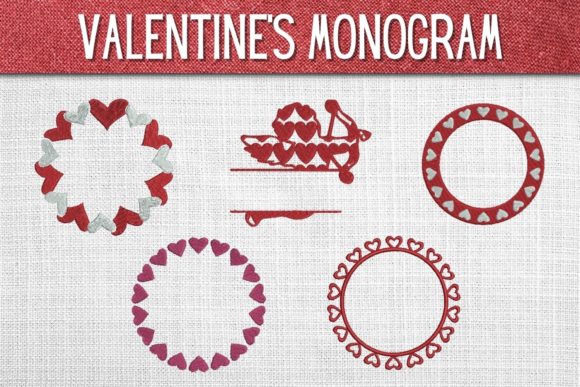
Valentine s Monogram: A Designer s Practical Review
I have looked at hundreds of monogram designs over the years, and most of them land somewhere between forgettable and overly fussy. The Valentine s Monogram design caught my attention because it does something surprisingly difficult: it balances a romantic seasonal theme with genuine everyday usability. Before you load this onto a machine and start stitching, there are quite a few things worth thinking through from a real production standpoint.
What This Design Actually Feels Like On First Look
Opening the file, the first thing that registers is the mood. It reads as warm, personal, and gently festive without screaming holiday novelty. The shape flow feels intentional. The letterforms sit in a layout where the Valentine theme supports the monogram rather than overpowering it. That matters enormously when you are making something someone will actually wear or display beyond February.
Too many seasonal machine embroidery design files lean so heavily into hearts and cupids that the finished product becomes a one-week item. This one feels more like a classic monogram that happens to carry a romantic accent. If you run a small shop product line or sell finished pieces at craft fairs, you already know how important that distinction is for customer trust and repeat sales.
A Real Project Scenario To Ground The Evaluation
Let me describe exactly how I tested this mentally for a client project. I had a request for custom embroidered tote bags as bridesmaid gifts for a Valentine s weekend wedding. The idea was a linen tote with a soft blush monogram, something elegant but usable long after the event. The bride wanted romance but not kitsch. The Valentine s Monogram design was the first candidate I pulled up.
In that context, the decorative accents around the letter become a quiet frame rather than a loud motif. On natural linen, stitched in a dusty rose or muted gold thread, the design would look like a thoughtful personalized gift rather than mass-market holiday decoration. That is the threshold where a handmade product crosses into boutique territory.
The same logic applies if you are an Etsy seller preparing Valentine listings. Buyers browsing in late January are often looking for gifts that feel seasonal but not disposable. A tote bag design or pillow cover stitched with this monogram can sell as a romantic present without becoming irrelevant by spring.
Where The Design Fits Best In Real Embroidery Work
After years of running commercial and personal projects, I evaluate every embroidery file against a mental checklist of product types. Here is where Valentine s Monogram feels naturally at home:
- Custom apparel like sweatshirts and denim jackets where the monogram sits on the upper chest or sleeve
- Sweatshirt embroidery for cozy Valentine gifts that get worn all winter
- Linen tea towels and kitchen towel sets for seasonal home decor
- Canvas tote bags with a single monogram placement as wedding party gifts
- Pillow covers in nursery or bedroom settings with soft neutral backgrounds
- Aprons for a baker or home cook as a Valentine surprise
- Embroidered patch applications on pouches, makeup bags, or jean jackets
- Baby embroidery on blankets or onesies for February newborns
Notice I did not lead with caps or structured hats. Curved surface embroidery brings its own complications, and this design likely contains dense central elements that need flat stable ground to read clearly. More on that shortly.
Characteristics That Affect The Stitched Result
When I assess any applique design or decorative monogram file, I look at the interplay between satin stitch, fill stitch, and running stitch sections. The Valentine s Monogram appears to rely on a core combination of smooth satin borders and filled letter bodies with decorative running accents. That mix directly impacts your stitch density settings and your choice of stabilizer.
On a medium-weight cotton or linen, with a quality cutaway stabilizer, I would expect the lettering to hold sharp edges and the decorative flourishes to register cleanly. On thin or loosely woven fabrics, you will need extra backing and possibly a topper to prevent the satin columns from sinking and losing definition. This is not a design flaw. It is just the reality of dense lettering on delicate ground cloth.
When To Pause And Test Before Committing
Every embroidery project benefits from a sew-out test, but certain situations demand one. Here are the conditions where I would absolutely run Valentine s Monogram on scrap fabric before stitching a final piece:
- Small hoop sizes that force the design to scale down, potentially closing up fine details
- Textured fabrics like terry cloth, fleece, or loosely woven wool where small decorative elements may blur
- Stretchy fabric such as jersey or French terry that shifts under dense stitching without proper backing
- Thin fabric like lightweight cotton voile that puckers easily around filled areas
- Dark fabric backgrounds where thread color contrast becomes critical for readability
- Layered garments with seams or zippers near the embroidery field
- Curved surfaces including caps and hat fronts where the design may need repositioning
- Items requiring frequent washing, where dense satin sections need reinforced backing to prevent thread breakage
The most common regret I hear from fellow craft business owners is skipping the test stitch on a tight timeline. Do not let that be you, especially when working with monograms that combine lettering and decorative motifs. The eye catches imperfections in letterforms faster than anywhere else.
How Thread Color Choices Change Everything
One exercise I recommend: load the digital embroidery file into your software and toggle between a light and dark background simulation. The same Valentine s Monogram stitched in cream on natural linen reads completely differently than the identical design in burgundy on charcoal. The romantic tone shifts from soft and airy to dramatic and moody, even though the stitch data never changes.
For holiday embroidery and Valentine products, I find metallic threads or variegated rose gold options can add a layer of perceived value that justifies a higher price point. But metallic threads also demand slower machine speeds and needle changes. Factor that production time into your cost calculations before quoting a bulk order for commercial embroidery.
Licensing And Commercial Use Realities
Since the product description mentions multiple embroidery file formats and encourages using these designs to personalize romantic gifts, the file is clearly intended for practical use. What the description does not specify in detail is the commercial license scope. Before listing finished items on Etsy, selling at markets, or using this in digital product previews and printable mockups, check the license terms directly.
Questions I always verify when sourcing design assets for client work: Can I sell physical finished items? Is there a volume limit? Can I use the stitched result in product photography and social media without attribution? Can I include it in a bundled personalized gift collection? These answers determine whether the embroidery design is truly viable for a small shop product or strictly for personal projects.
How The Design Shapes Buyer Engagement And Brand Feel
From a customer psychology standpoint, a well-executed monogram does heavy lifting for your brand. It signals care. When someone receives a custom apparel item with a monogram that looks intentional and crisp, they associate that quality with your shop. The romantic detail in Valentine s Monogram elevates the piece without making it feel overly feminine or one-dimensional, which is a real advantage if your buyer demographic includes couples gifting each other matching items.
The visual appeal of this design stems from proportion. The letter stands proud while the Valentine accents support the composition. In finished product photography, that kind of balanced layout photographs well from multiple angles. When I shoot items for listings, designs that read clearly at a slight distance, like a tote held at arm s length or a pillow on a chair, consistently outperform busy patterns that blur into texture.
Practical Designer Notes Worth Writing Down
Before sending this to the machine, here is my working checklist based on how Valentine s Monogram presents:
- Confirm the hoop size needed for the design at full scale and test whether it scales down cleanly
- Check thread colors against at least two fabric swatches, one light and one dark
- Review stitch density in the letter interior and the decorative border for potential pucker points
- Use a cutaway stabilizer on apparel and a tearaway with topper on towels
- Inspect the smallest decorative elements to confirm they stitch cleanly without thread breaks
- Run a black-and-white digital preview to evaluate contrast separate from color preference
- Test on the exact fabric you plan to use, not a substitute
- Verify commercial embroidery licensing if selling finished goods or including in Etsy seller inventory
- Note whether the design reads well as a standalone embroidered patch for versatile product applications
Final Word From The Worktable
I have learned that a good Valentine s Day embroidery design is not about how many hearts you can fit around a letter. It is about restraint. The Valentine s Monogram gets that balance right. It brings enough seasonal warmth to justify a February product launch or a romantic holiday gift collection, while remaining tasteful enough for year-round monogram work. For someone building a craft business, that dual utility is genuinely valuable.
Stitch it thoughtfully. Test it properly. Choose your fabrics and threads with intention. When those pieces come off the hoop looking clean and professional, your customers notice, and they come back.