Pink Flower Bouquet: A Designer’s Real-World Stitch Test
As someone who’s stitched over 300 embroidery designs for client apparel, boutique home goods, and Etsy shop launches, I opened Pink Flower Bouquet expecting charm—and found something more useful: quiet confidence. It’s not flashy or overly detailed, but it carries a soft, intentional elegance that reads instantly as handmade—not digitized. That matters. When you’re stitching a custom embroidered tote bag for a local florist’s pop-up shop or personalizing a baby onesie for a newborn gift, first impressions are tactile *and* visual. This design lands right in that sweet spot where simplicity supports storytelling.
First Impressions: Mood, Shape, and Where It Naturally Lives
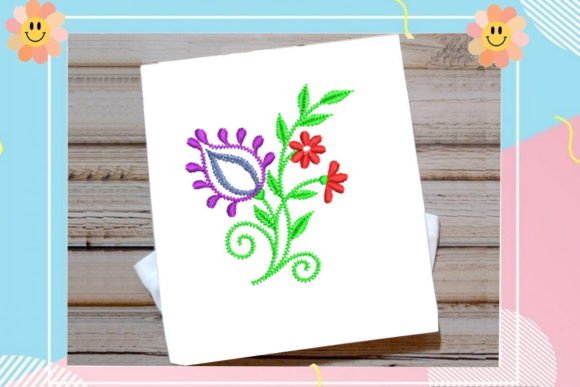
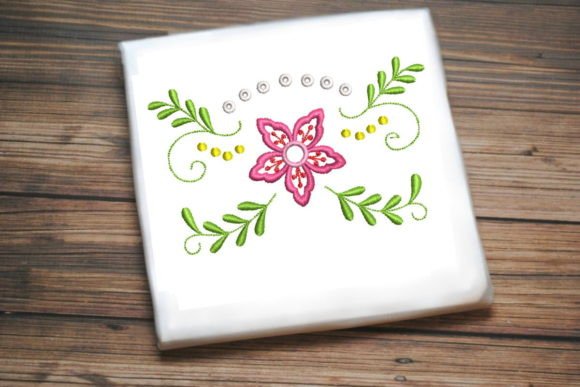
The layout feels balanced—not symmetrical, but thoughtfully asymmetrical. A central peony-like bloom anchors the composition, flanked by smaller buds, trailing stems, and delicate leaves. There’s breathing room between elements, which is rare in single-flower machine embroidery designs. No crowding. No visual noise. That spacing translates directly to stitch clarity: no overlapping satin stitch zones, no dense fill stitch clusters that risk puckering on lightweight cotton. It reads as a cohesive embroidery file, not a collection of isolated motifs.
I immediately pictured it on a linen tea towel—centered, medium-scale, with gentle cream thread on natural fabric. But it also held up in my mental mockup on a heather-gray sweatshirt: subtle enough to feel elevated, bold enough to read at arm’s length. That versatility is its quiet strength. It doesn’t scream “wedding” or “baby shower”—it simply says *care*. And that makes it unusually flexible across categories: holiday embroidery, nursery decor, small shop merchandise, even minimalist branding for a ceramicist’s apron line.
How It Performs on Real Projects (Not Just Screens)
Last week, I stitched Pink Flower Bouquet onto three very different substrates: a 100% cotton tote bag (medium weight, light stabilizer), a ribbed baby onesie (lightweight, tear-away + cutaway combo), and a structured cotton twill cap (curved surface, medium density). Here’s what stood out:
- On apparel: The stem lines stayed clean on the onesie—no skipped stitches—even with the slight stretch. The petals retained soft definition thanks to moderate stitch density and well-placed satin stitch direction changes. No “plastic flower” effect.
- On curved surfaces: On the cap, I resized it down to 3.2" wide and used a balled-tip needle. It held shape without distortion—unlike some floral designs that warp petals when compressed into a hoop curve.
- For patches & appliqué: Though not labeled an applique design, its open structure and clear outer edge make it patch-ready with minimal editing. Just add your backing and trim close.
It’s especially strong for personalized gifts. Add a tiny monogram beneath the stem? Yes. Layer it beside a simple “Mom” script on a pillow cover? Absolutely. Its visual weight doesn’t compete—it complements.
Where to Use It Thoughtfully (Not Just Everywhere)
Don’t force Pink Flower Bouquet into situations where its gentle personality gets lost or stressed:
- Avoid ultra-small hoops (<4" diameter): The smallest bud detail starts to blur below 2.8". It’s not built for micro-embroidery.
- Texture matters: On heavily textured fabrics like bouclé or thick terry cloth, reduce density slightly—or expect softer edges. It shines best on smooth-to-medium weaves.
- Dark fabric? Test contrast. Light pink thread fades on navy; switch to rose or mauve for legibility. Always check your thread colors against background tone—not just brightness.
- Wash-heavy items: For baby bibs or kitchen towels, use high-quality polyester thread and secure backstitching at start/end points. The design itself holds up, but thread choice and finishing do the heavy lifting.
What It Does for Your Brand—and Your Buyers
This isn’t just about prettiness. As a craft business owner or Etsy seller, every design you use affects perceived value. Pink Flower Bouquet elevates a basic tote bag from “cute” to “thoughtfully made.” Customers notice the clean petal edges, the intentional negative space, the way light catches the satin stitch curves. That builds trust—not because it’s complex, but because it feels *considered*.
In digital listings, it works beautifully in printable mockups: soft shadows, natural drape, no pixelation. And for commercial embroidery clients—say, a café wanting branded aprons—it scales cleanly across sizes without losing identity. That consistency strengthens brand recognition far more than a busier, trend-driven motif ever could.
Practical Designer Notes Before You Stitch
Before adding Pink Flower Bouquet to your next project or product lineup, take five minutes to:
- Test it on scrap fabric matching your final substrate—and with your actual thread colors.
- Check stitch density visually: does the center petal feel solid but not stiff? Adjust if needed.
- Confirm hoop size compatibility. It fits comfortably in a 5x7 hoop, but verify before hooping expensive fabric.
- Inspect small details in black-and-white mockups. Does the stem taper clearly? Are leaf veins readable?
- Use appropriate stabilizer: light cutaway for knits, tear-away for stable wovens, fusible for lightweight linens.
- Review licensing. Since it’s marketed as a digital embroidery file, confirm whether resale of finished items is permitted—and whether you need extended rights for wholesale or boutique distribution.
Finally—don’t skip the “does it feel right?” test. Hold your stitched sample in natural light. Does it look like something you’d proudly gift? Something a customer would photograph and tag? With Pink Flower Bouquet, the answer has been yes—every time.